Как часто вам приходится вспоминать слова на разных языках, чтобы сказать что-то? Возможно, вы чувствуете себя обязанными выучить все возможные слова, но это не так. Сегодня мы расскажем вам о простом трюке, который позволит вам легко и быстро дополнять предложения всеми необходимыми словами.
В этой статье вы узнаете, как использовать слова из данной вам коробки, чтобы создать полные и грамматически правильные предложения. Мы расскажем вам о преимуществах и недостатках этого подхода, и дадим вам несколько полезных советов о том, как использовать его в реальной жизни. Подготовьтесь к тому, чтобы расширить свой словарный запас и улучшить свои языковые навыки!

Улучшите свой словарный запас с помощью этого упражнения
Расширение словарного запаса — важный навык при изучении любого языка. Чем больше слов вы знаете, тем легче вам будет понимать и использовать язык. Одним из способов улучшить свой словарный запас является выполнение упражнений. В данной задаче вам предлагается заполнить пропуски в предложениях словами из списка.
Почему это важно?
Знание большего количества слов позволяет вам выразить свои мысли более точно и точно понимать сообщения, которые вы видите или слышите. Это также помогает вам лучше понимать тексты и разговоры на изучаемом языке. Улучшение словарного запаса также помогает повысить вашу грамматику и понимание языковых конструкций.
Как выполнить это упражнение?
Для выполнения этого упражнения вам нужно прочитать предложения, представленные в списке, и заполнить пропуски словами из списка. Постарайтесь выбрать наиболее подходящее слово для каждой пропущенной части предложения. Проверьте свои ответы, чтобы убедиться, что они правильные.
Пример
Пример:
- She to school every day. (goes, runs, walks)
Пропуски в предложениях
Заполните пропуски словами из следующего списка:
- cat
- book
- happy
- beautiful
- eat
- The is black and white.
- I like to read a good before bed.
- She always has a on her face.
- The sunset over the ocean was absolutely .
- I’m hungry. Let’s go out and .
Предложение и слово
Enhance your language skills
Language skills are crucial in today’s globalized world. They not only help us communicate with others effectively but also open doors to various opportunities. Whether you are a student, a professional, or just someone who wants to improve their language proficiency, there are ways to enhance your language skills.
1. Immerse yourself in the language
One of the best ways to improve your language skills is by immersing yourself in the language. This can be done by surrounding yourself with native speakers, watching movies or TV shows in the target language, or even traveling to a country where the language is spoken. Immersion allows you to practice the language in a natural and authentic way, helping you become more fluent and comfortable with it.
2. Practice regularly
Consistency is key when it comes to improving your language skills. Make it a habit to practice the language regularly, whether it’s through speaking, writing, listening, or reading. Set aside dedicated time each day to engage with the language, and try to incorporate it into your daily life as much as possible. The more you practice, the faster you will see progress.
3. Use technology to your advantage
In today’s digital age, there are numerous language-learning tools and resources available online. Take advantage of these resources to enhance your language skills. There are language-learning apps, online courses, podcasts, and even language exchange platforms that connect you with native speakers. Use these tools to supplement your learning and practice the language in a convenient and accessible way.
4. Expand your vocabulary
Vocabulary plays a crucial role in language proficiency. To enhance your language skills, make an effort to expand your vocabulary. Read books, articles, or blogs in the target language, and pay attention to new words and phrases. Write down unfamiliar words and their meanings, and try to use them in your own sentences. Additionally, practice using synonyms and antonyms to improve your understanding and ability to express yourself effectively.
5. Seek feedback and guidance
Seeking feedback and guidance from native speakers or language tutors can greatly assist in improving your language skills. They can provide valuable insights, correct your mistakes, and help you refine your pronunciation, grammar, and syntax. Join language classes or find a language partner who can provide regular feedback and guidance. Their expertise and support can accelerate your language learning journey.
Remember, enhancing your language skills takes time and effort. Be patient with yourself, stay motivated, and enjoy the process. With consistent practice and the right strategies, you can become more proficient in any language you choose to learn.

Sharpen your grammar with this activity
Grammatical accuracy is an essential aspect of effective communication in any language. It helps convey ideas clearly and ensures that the intended meaning is properly understood. However, mastering grammar can be a challenging task for many language learners.
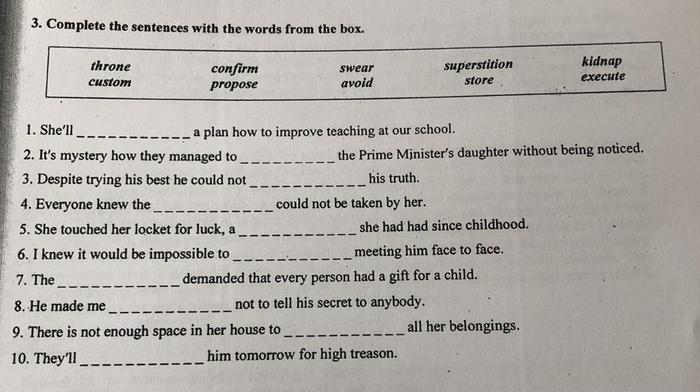
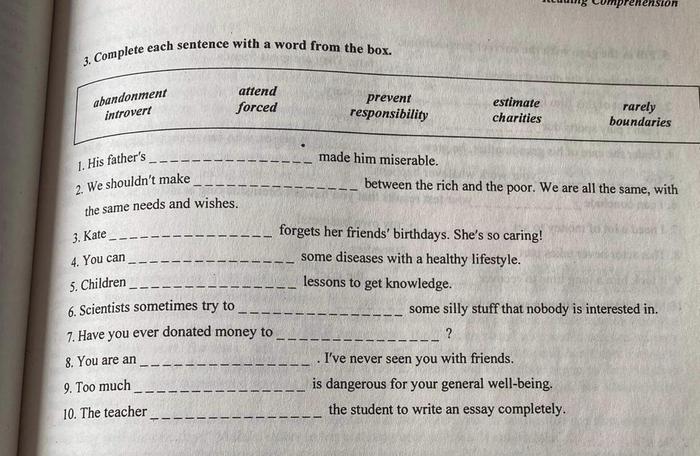
Fortunately, there are various activities that can help improve grammar skills. One such activity is completing sentences with the appropriate words. This activity allows learners to practice and reinforce their understanding of grammar rules, word order, and vocabulary usage.
Enhancing grammar skills through sentence completion:
This activity involves completing sentences with the correct words from a given set of options. It requires learners to analyze the sentence structure, identify the missing word, and select the most appropriate choice. By engaging in this activity, learners focus on grammar rules and develop their ability to apply them accurately.
Benefits of the sentence completion activity:
1. Reinforcement of grammar rules: Completing sentences using the correct word can help reinforce the understanding of grammar rules. It allows learners to see these rules in action and apply them in context.
2. Vocabulary expansion: Sentence completion activities often provide a range of words to choose from. Learners can expand their vocabulary by encountering new words and understanding their usage within the given context.
3. Development of critical thinking skills: Sentence completion requires learners to think critically and analyze the sentence structure. They need to consider the meaning and context to select the appropriate word. This process enhances their critical thinking skills and improves overall language comprehension.
Tips for effective sentence completion:
1. Read the entire sentence: It is important to read the entire sentence carefully to understand its meaning and context. This will help in identifying the missing word accurately.
2. Analyze the sentence structure: Pay attention to the grammatical structure of the sentence, such as verb tenses, subject-verb agreement, and word order. This analysis will guide you in choosing the correct word.
3. Consider the context: Look for clues within the sentence that can help you determine the appropriate word. Consider the intended meaning and the relationship between different elements in the sentence.
4. Practice regularly: Regular practice is key to improving grammar skills. Engage in sentence completion activities often to reinforce your understanding and develop accuracy in using words within sentences.
By incorporating the sentence completion activity into your language learning routine, you can sharpen your grammar skills and enhance your overall communication abilities. Remember to practice regularly, analyze sentence structures, and consider the context to select the most appropriate word. Happy learning!
Boost your reading comprehension
Reading comprehension is an essential skill that allows us to understand and interpret written information. It is not only important for academic success but also for everyday life. By improving your reading comprehension, you can enhance your understanding of various texts, such as books, articles, and even emails.
Here are some strategies to help you boost your reading comprehension:
1. Skim the text
Before diving into the details of a text, it can be helpful to skim through it quickly. Skimming involves quickly reading the headings, subheadings, and the first and last sentences of each paragraph. This will give you an overview of the content and allow you to get a sense of what the text is about.
2. Identify the main idea
The main idea is the central theme or concept that the author wants to convey. To improve your reading comprehension, try to identify the main idea of the text. Look for clues in the introductory and concluding paragraphs, as well as recurring themes throughout the text. Understanding the main idea will help you grasp the overall meaning of the text.
3. Highlight key points
While reading, it can be useful to highlight or underline key points or important information. This will make it easier for you to review and remember important details later. You can use different color markers or highlighting techniques to distinguish between main ideas, supporting details, and examples.
4. Take notes
Writing down key points, summaries, or questions while reading can improve your comprehension and retention of the material. Taking notes helps you process and organize information, and it also allows you to review the material later. Use abbreviations, symbols, and headings to make your notes more concise and structured.
5. Ask questions
Engaging with the text by asking questions is a great way to enhance your reading comprehension. Before, during, and after reading, ask yourself questions about the content, context, or author’s intent. This will help you actively think about the text and make connections between different ideas.
6. Practice active reading
Active reading involves being fully engaged with the text. Instead of passively reading, actively interact with the material by making predictions, summarizing paragraphs, or discussing concepts with others. This will keep your mind focused and improve your understanding of the text.
By implementing these strategies, you can significantly improve your reading comprehension skills. Remember that practice is key. The more you read and apply these strategies, the better you will become at understanding and interpreting various texts.

Развитие навыков критического мышления
Критическое мышление — это способность анализировать, оценивать и интерпретировать информацию с целью принятия обоснованных решений. Развитие этого навыка позволяет нам стать более компетентными и успешными в различных сферах жизни, включая работу, обучение и личное развитие. В этой статье мы рассмотрим несколько методов, которые помогут развить навыки критического мышления.
1. Анализируйте информацию
Первый шаг к развитию критического мышления — это умение анализировать информацию. Важно научиться выделять ключевые аспекты и факты из общего объема информации. Необходимо задавать вопросы и искать причинно-следственные связи, а также оценивать достоверность и соответствие источников информации.
2. Развивайте навыки рассуждения
Второй шаг — развитие навыков рассуждения. Это включает умение анализировать аргументы и доказательства, а также оценивать их вес и значимость. При развитии навыков рассуждения, вы должны быть в состоянии представлять различные точки зрения и анализировать их с позиции логики и рациональности.
3. Практикуйте критическое мышление
Третий шаг — это практика критического мышления. Чем больше вы практикуетесь в анализе и оценке информации, тем сильнее становятся ваши навыки критического мышления. Постоянная практика помогает вам развивать критическое мышление как навык, который становится все более интуитивным и автоматическим.
4. Используйте различные методы и техники
Четвертый шаг — это использование различных методов и техник развития критического мышления. Некоторые из этих методов включают осознанное чтение, составление списков преимуществ и недостатков, создание ментальных карт и проведение дебатов. Выбирайте те методы и техники, которые вам наиболее подходят и позволяют эффективно развивать ваше критическое мышление.
5. Обучайтесь у экспертов
Пятый шаг — это обучение у экспертов. Изучайте работы и исследования ученых, философов и других экспертов, которые активно используют критическое мышление в своей работе. Изучение их методов и подходов может помочь вам расширить свой кругозор и улучшить навыки критического мышления.
Развитие навыков критического мышления требует времени, усилий и постоянной практики. Однако, улучшение этих навыков может принести значительные пользу вам как личности и помочь достичь успеха в различных сферах жизни. Начните сегодня и продолжайте развиваться!
Have fun while learning
Learning can often be seen as a tedious and boring task, but it doesn’t have to be that way. In fact, learning can be enjoyable and fun, if approached in the right way. Incorporating fun and engaging activities into the learning process not only makes it more enjoyable for the learner, but also enhances the overall learning experience and retention of knowledge. Here are some ways to have fun while learning:
1. Gamification
One effective way to make learning more fun is by incorporating elements of gamification. Gamification involves using game-like elements, such as points, badges, leaderboards, and challenges, to motivate and engage learners. This can be done through the use of educational games, quizzes, or interactive activities that make learning feel like play.
2. Hands-on activities
Engaging learners in hands-on activities can bring the subject matter to life and make learning more enjoyable. Whether it’s conducting science experiments, building models, or participating in group projects, hands-on activities allow learners to actively engage with the material and apply what they have learned in a practical and meaningful way.
3. Multimedia resources
Using multimedia resources, such as videos, animations, and interactive simulations, can make learning more visually appealing and engaging. These resources can help to explain complex concepts in a more accessible and relatable manner, and can also cater to different learning styles by providing a variety of sensory experiences.
4. Collaborative learning
Learning doesn’t have to be a solitary activity. By encouraging collaboration and group work, learners can have fun while learning from and with their peers. Group activities, discussions, and problem-solving tasks promote active engagement and the exchange of ideas, making the learning process more interactive and enjoyable.
5. Use of humor
Humor can be a powerful tool in making learning more enjoyable. Incorporating jokes, funny anecdotes, or humorous examples into the learning materials can help to create a relaxed and positive learning environment. Not only does humor make learning more enjoyable, but it can also aid in memory retention by making the information more memorable.
By incorporating these fun and engaging methods into the learning process, learners can have a more enjoyable and effective learning experience. Remember, learning doesn’t have to be dull and boring. With the right approach, learning can be a fun and fulfilling journey.